Outdoor Kitchen Ideas:
Best Designs & Layouts

An outdoor kitchen turns your backyard into the place everyone gathers. The grill’s going, drinks are on the counter, and people naturally settle in and stay awhile. It becomes a regular part of how you live at home.

The best outdoor kitchen setups feel effortless. The layout flows, everything is within reach, and the space is built to be used often. When it’s planned right from the start —design, layout, and cost working together— you end up with something that looks incredible and performs just as well over time.

Here are five outdoor kitchen ideas, along with layout, tips and cost ranges, to help you build a space your family will enjoy every day.
Simple Outdoor Kitchen Setup

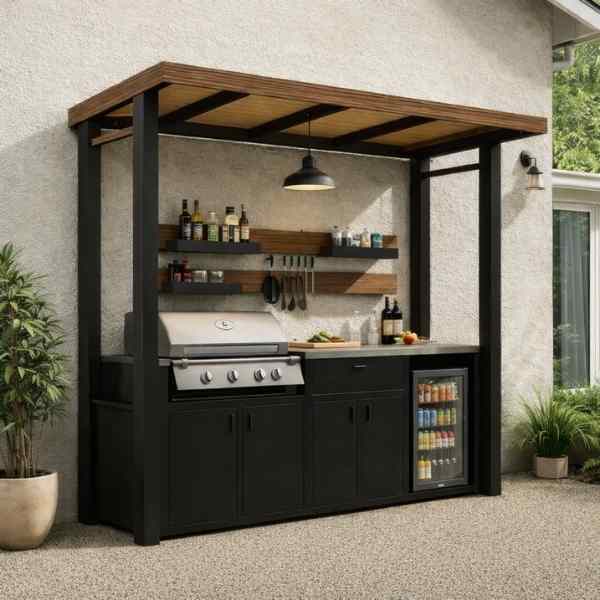
This is the clean, no-drama way to get an outdoor kitchen in place. Built straight along a wall, it gives you a real grilling station that looks intentional—not something sitting off to the side. Add a simple attached cover and now it’s protected, usable in the heat, and actually part of your space.

Most of these stay simple on purpose. No sink, no cooktop—just a grill, counter space, and maybe a small fridge. That’s what keeps it easy, affordable and portable if you decide to move it later. 

This setup works especially well in smaller patio areas where space matters. Running everything along a wall keeps the layout tight and controlled, so you’re not eating into the rest of your outdoor living space. It gives you a defined cooking area without taking over the entire patio. And because it’s a straight, wall-based layout, it’s easy to build around.

Simple Outdoor Kitchen Breakdown


The Elements

A grill anchors your outdoor kitchen setup, with counter space for prep and serving. A small fridge can be added if you want to keep drinks and essentials within reach, but the goal here is to keep it simple and functional.

The Structure
The housing is typically a prebuilt unit or a simple block and stucco island, positioned along a wall for support and efficiency. A wall-mounted or lean-to cover ties into the structure and provides shade where it matters most.

The Flooring
A rubber concrete overlay in a soft beige blend finishes the space. It stays cooler underfoot, adds traction around the cooking area, and makes the setup feel complete instead of temporary.

What to Know
There’s no sink at this level, which keeps the build straightforward. Most people end up wanting one later, so if that’s even a possibility, it’s smart to plan placement near a water source from the start.

Space-Saver Outdoor Kitchen

outdoor kitchen

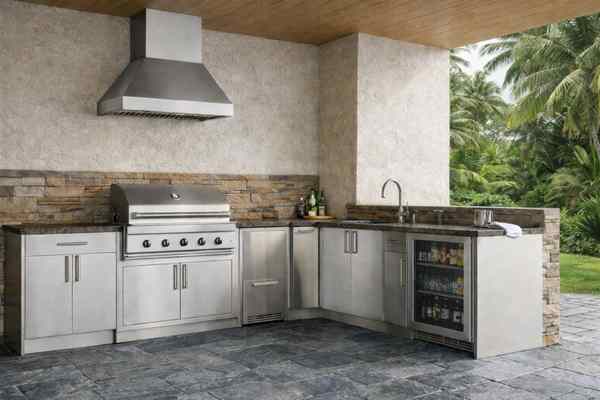
This is for the patio that isn’t huge—but still deserves a real outdoor kitchen. Instead of trying to squeeze in something oversized, this keeps everything scaled to the space so it actually works. It feels intentional, not crowded, which is the whole point.

A smaller outdoor kitchen like this usually comes together as a short run or corner layout. Everything is right there, easy to use, and you’re not pacing back and forth while you’re cooking. It’s compact in a good way—the kind that just feels efficient.

And it leaves the rest of your patio for seating, walking space, all the things that make an outdoor kitchen area feel relaxed instead of overbuilt.

Space-Saver Outdoor Kitchen Breakdown


The Elements

A grill, counter space, and a built-in sink—everything you need right there. It’s a complete outdoor kitchen, just scaled into a tighter footprint.

The Structure
An L-shaped layout that uses the corner to its advantage. It wraps the space, gives you defined zones to work in, and makes the whole setup feel intentional.

The Flooring
Stamped concrete in a slate-style finish adds texture and keeps the look clean without overwhelming the space.

What to Know
This setup is tighter by design, but that’s what makes it work. Everything is within reach, the layout is efficient, and it still feels like a fully built outdoor kitchen—not a stripped-down version.


Entertainer Outdoor Kitchen

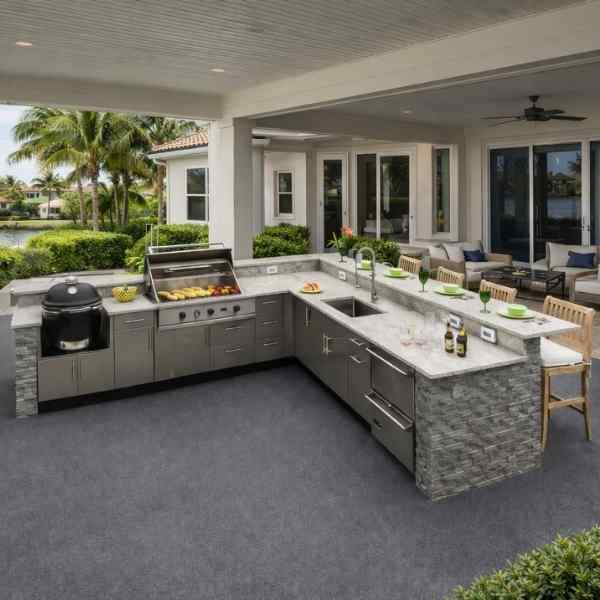
This is the outdoor kitchen that people gather around without being told to. It’s not just where the food is—it’s where everyone ends up standing, sitting, talking, and staying longer than they planned to.

The difference here is the layout. Instead of everything facing one direction, this one opens up. You’re cooking, but you’re still part of what’s going on. No turning your back, no stepping away—you’re right in it.

And once you have that bar space, it changes everything. People sit, lean in, grab a drink, talk while you’re cooking. It turns the whole outdoor kitchen into part of the experience instead of just the place where the food comes from.

Entertainer Outdoor Kitchen Breakdown


The Elements

A full grill setup, extended counter space, and usually a fridge or beverage cooler. There’s room to prep, serve, and actually interact at the same time.

The Structure
An L-shaped or extended outdoor kitchen with a built-in bar overhang for stools. That seating edge is what makes it—people can sit, face the kitchen, and be part of it while you’re cooking.

The Flooring
A rubber concrete overlay works well here because it handles more traffic and keeps the space comfortable where people are standing and sitting.

What to Know
This one is built for friends and family. The bar seating is what pulls everything together and turns it into a space people naturally gather in.

Finishing the Space Around Your Outdoor Kitchen

The outdoor kitchen is the anchor—but it’s everything around it that makes people actually want to stay out there. Flooring, seating, shade…that’s what turns it from a cooking area into a place you use all the time.

The Flooring Makes a Bigger Difference Than You Think


This is what pulls the whole space together. Once the kitchen is in, the flooring is what makes it feel finished and intentional instead of something placed on top of a patio. It sets the tone, defines the area, and changes how the space actually feels when you’re out there.

A rubber concrete overlay is a really clean way to go here. It gives you a soft, even surface that’s comfortable to stand on, adds traction around cooking areas, and creates a seamless look that reads as one complete outdoor zone. It also blends easily with different styles, so whether the kitchen leans modern or more natural, the floor doesn’t fight it.

Stamped concrete brings in more texture and detail. A slate-style pattern adds depth and gives the space a more designed, built-in feel. It pairs well with stone, cabinetry, and countertops, and it helps the whole setup look more custom instead of pieced together.

Both options work—it just depends on the look you want to lean into. The key is that the flooring isn’t an afterthought. It’s what makes the outdoor kitchen feel like it belongs there.

Seating Is What Pulls People In

If there’s a place to sit, people will use it. Bar seating, even just a couple stools, completely changes how the space feels. It gives people somewhere to land, hang out, talk while you’re cooking.

Without it, everyone kind of drifts back inside. With it, they stay.

Bringing Your Outdoor Kitchen Together

The right outdoor kitchen fits your space and how you use it. When the layout flows, everything feels easy—you step out, start cooking, and the space just works without thinking about it.

From there, it’s the surrounding details that make it feel complete. The flooring grounds the space, the seating keeps people there, and the coverage and lighting make it comfortable to use any time of day.

It comes together fast when those pieces are in place. A space that feels finished, easy to use, and somewhere people naturally gather—that’s what makes it worth doing.

If you’re planning an outdoor kitchen, start with the surface it’s going on.
That’s where we come in. At Advanced Concrete Coatings, we install rubber concrete resurfacing systems designed to handle the heat, add traction and cushion underfoot, and give your space a clean, finished look from the start.

Take a look at your patio and let’s build it from the ground up.

Transform Your Space with Concrete Resurfacing Today!